|
 |
 |
 |
|
|
|
 |
|

|
|
|
|
|
|



Excerpt from "Toxicology of Urea Formaldehyde and Polyurethane Foam Insulation"
by John C. Harris, MD; Barry H. Rumack, MD; Franklin D. Aldrich, MD, PhD
As printed in the Journal of The American Medical Association, Jan. 16, 1981, Vol. 245, No. 3 (Copy of complete study available upon request)
Polyurethane Foams
Background
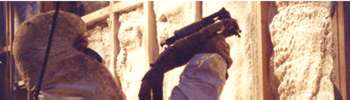
When toxicity from urea formaldehyde foam insulation became publicly known, the Rocky Mountain Poison Center received numerous calls regarding polyurethane foam. Toxicity of polyurethane foams is restricted to the manufacturing process, except during fires. Each year, many thousands of tons of polyurethane foams are produced for applications ranging from structural members to pillows. When used as structural insulation, polyurethane foam "sandwiches" of outer paneling, foam core, and inner wall are transported to the job site and assembled onto the framework of the building. Because of the high R value of polyurethane forms, this insulation material has become popular for new housing construction.
Technical Aspects
Polyurethane foams may vary in physical state from tough, rigid solids that can be used for insulation, molding, and structural applications to very soft flexible materials that are suitable for seat cushions. Density of foams may range from approximately 8 kg/L to 1kg/L, depending on the purpose for which the foam is designed. Formation of polyurethane foam involves reacting or difunctional or multifunctional alcohol (polyol) with an aromatic isocyanate in the presence of a blowing agent, catalyst, and surfactant.
A fully cured polyurethane foam contains no residual isocyanate or polyol and, in contrast to the urea formaldehyde foams, presents no problems of bleed-off of toxic products. Only fully cured panels are used in home insulation, and there have been no reports of human toxicity caused by this insulation material. For more information about toxins released from insulation during a fire, click here.